
San Judas Tadeo Encyclopedia 2026: The Definitive Guide to the Patron of Impossible Causes
Introduction: The Eternal Beacon of Hope
In a world increasingly defined by rapid technological shifts, climate instability, and global socio-economic uncertainty, the figure of San Judas Tadeo (Saint Jude Thaddeus) remains an unwavering pillar of spiritual resilience. As we move through 2026, his influence has transcended the boundaries of traditional Catholicism, embedding itself deeply into modern art, high-tech tattoo culture, and digital-first devotion. Known globally as the "Patron Saint of Lost Causes" and "The Apostle of the Impossible," Saint Jude is far more than a historical figure; he is a psychological and spiritual anchor for millions facing desperate straits. This 2026 Encyclopedia serves as the ultimate comprehensive bridge between ancient theology and contemporary expression. It provides a deep-dive into the history, complex symbolism, and the very latest manifestations of one of the most beloved and powerful figures in human history. Whether you are a scholar of divinity, a tattoo enthusiast looking for technical excellence, or a seeker of hope, this guide is designed to be your definitive resource. ---Part I: Deep Theological History — The Apostle Jude Thaddeus
1.1 Identity and Biblical Origins
Jude Thaddeus was one of the twelve original Apostles hand-picked by Jesus Christ to spread the Gospel. In the New Testament, he is meticulously distinguished from Judas Iscariot—the man who betrayed Jesus—to avoid any confusion among the faithful. The name "Jude" (or Judas) was remarkably common in the first-century Judean landscape, derived from the Hebrew Yehuda, which translates directly to "praise to God." His second name, "Thaddeus," or "Lebbaeus," is often interpreted by etymologists to mean "courageous heart" or "son of the heart," reflecting the profound bravery and compassion he would later display in his global missionary works. Theologically, Jude is frequently identified in scripture as the "brother of James the Less," and by cultural extension, a kinsman or "cousin" of Jesus. This familial connection is of paramount importance in Eastern Orthodox and Catholic traditions, as it underscores his intimate proximity to the Messiah during his earthly ministry. He was not just a follower; he was a family member who witnessed the miracles of Christ from a position of unique intimacy.1.2 The Epistle of Jude: A Warning to the World
Saint Jude is also the reputed author of the Epistle of Jude, one of the shortest yet most intense books in the New Testament. In this letter, Jude writes with a sense of extreme urgency, warning the early Christian communities against "false teachers" who had "crept in unawares."- Theological Themes: He speaks of the necessity of "contending for the faith" and uses vivid imagery involving angels, archangels (Michael), and ancient judgments (Sodom and Gomorrah).
- 2026 Context: In the modern era of "deepfakes" and misinformation, the Epistle of Jude is experiencing a resurgence in popularity, as many see his warnings against deception as a direct parallel to the challenges of the digital age.
- Galilee and Samaria: His initial preaching grounds, establishing the foundational tenets of the early church.
- Mesopotamia (Modern-day Iraq): Where he established vibrant early Christian communities amidst diverse pagan and Zoroastrian cultures.
- Armenia: Ancient traditions credit Jude and Bartholomew as the "Apostles of Armenia," making it the first nation to officially adopt Christianity.
- Libya and Turkey: Spreading the Gospel to the Hellenistic world, bridging the gap between Semitic and Greek thought.
- Persia (Modern-day Iran): His final and most impactful mission. In Persia, Jude worked alongside Saint Simon the Zealot. The two were a formidable team, reportedly performing miracles that included the expulsion of demons and the miraculous healing of the blind. Their success in converting local populations and challenging the local pagan priesthood ultimately led to their martyrdom.
- Theological Meaning: This represents Pentecost. It is the physical manifestation of the Holy Spirit, which granted the Apostles the "gift of tongues"—the ability to communicate with people of all nations—and the divine wisdom to preach the Gospel without fear.
- Symbolism in 2026: In contemporary art, this flame represents the "spark of inspiration" or the "light at the end of the tunnel." It symbolizes that no matter how dark a situation is, divine intelligence is always present to guide the way out.
- The Legend: This refers to the Mandylion (The Image of Edessa). King Abgar of Edessa, suffering from a terminal case of leprosy, sent a message to Jesus asking for healing. Jesus, knowing his time on earth was short, pressed his face into a linen cloth, leaving a miraculous image of his features. He gave this cloth to Jude to deliver to the King. When King Abgar touched the cloth, he was instantly and completely healed.
- Theological Meaning: The medallion signifies that Jude is the bearer of Christ. It reinforces the idea that Jude does not work miracles on his own power; rather, he is a perfect conduit for the healing energy of Jesus. It symbolizes his role as a "Middleman of Miracles."
- Martyrdom Symbolism: This is the primary instrument used in his execution. It serves as a stark reminder of his ultimate sacrifice and the "weight" of his commitment.
- Traveler’s Tool: It also represents his role as a tireless traveler and missionary. In a modern sense, the staff represents Support. For those who feel they are "stumbling" through life, the staff of San Judas is a symbol of something solid to lean on.
- Green (Hope and Life): Green is the universal color of spring, growth, and renewal. It signifies that even in "dead" or "impossible" situations, there is always the possibility of a new beginning.
- White (Purity and Truth): The white mantle he often wears over his shoulder represents his purity of heart and the absolute truth of the message he carried. ---
- The 28th of Each Month: While his official feast day is October 28th, devotees in Mexico City gather at the Temple of San Hipólito on the 28th of every month.
- The Patron of the Streets: He is widely adopted by those on the margins of society—the youth, the urban poor, and those working in dangerous trades. He is seen as a saint who "understands the struggle."
- The Single-Needle Revolution: Artists are using advanced single-needle machines (3-0 and 1-0 configurations) to create portraits that look like they were drawn with a fine-point pen. This allows for microscopic detail in the medallion and the individual threads of his robe.
- Micro-Realism: This style emphasizes the human features of the saint—the weathered texture of his skin from years of travel and the compassionate "living" expression in his eyes.
- Prismatic Greens: Inks that shift slightly in tone depending on the viewing angle, mimicking the shimmer of a real silk robe.
- Luminous White: A new generation of white inks that are designed to stay bright for decades, used to highlight the "Tongue of Fire."
- Derm-Shield Pro: A breathable, silver-infused adhesive bandage that monitors the skin's temperature and hydration. If the tattoo is getting too dry or showing signs of inflammation, it sends a notification to the user's smartphone.
- Photo-Biomodulation (PBM): Low-level laser therapy devices are now used post-tattooing to speed up cellular repair, ensuring that the delicate fine-line work heals with 100% clarity. ---
- Symbolism: This is the "active" placement. It is visible to the wearer at all times.
- Purpose: It serves as a constant visual reminder to "keep going" when things get tough. It is the most common choice for those in high-stress professions (surgeons, first responders, entrepreneurs).
- Symbolism: Placing San Judas over the heart is the ultimate sign of personal devotion.
- Purpose: It is usually chosen by those who believe the saint saved their life or the life of a loved one during a medical crisis.
- Symbolism: The back represents what is behind us—our history and our protection.
- Purpose: A full-back mural of San Judas signifies that the saint "has your back." In 2026, these are often rendered in a "Neo-Baroque" style, featuring dramatic lighting and architectural backgrounds.
- Symbolism: The legs represent our movement through the world.
- Purpose: Frequent travelers and those in the logistics industry often choose this placement to invoke the saint’s protection on long journeys. ---
- The "Impossible" Framework: By acknowledging that some problems are "impossible" by human standards, the devotee finds a way to release the paralyzing stress of control. Handing the problem to the "Saint of the Impossible" allows for a psychological "reset."
- Community Resilience: The collective devotion creates a massive support network. Whether in a digital chat room or a physical temple, knowing that millions of others are also "contending for the faith" creates a sense of belonging that is rare in the modern age.
1.3 The Missionary Journeys: Into the Heart of Darkness
After the Resurrection and the monumental event of Pentecost, where the Holy Spirit descended upon the Apostles, Jude embarked on a series of grueling and dangerous missionary journeys. His path was one of the most extensive among the Twelve:1.4 The Martyrdom and the Relics
Historical records and hagiography suggest that Saint Jude was martyred around 65 AD. The most common account states he was beaten to death with a heavy wooden club or axe in the city of Suamir. This violent end is the source of the "Club" symbol often seen in his iconography. After his death, his remains were eventually transported to Rome. Today, his relics are enshrined in a beautiful altar within St. Peter's Basilica, specifically under the Altar of Saint Joseph. This high-profile placement in the heart of the Vatican signifies his eternal importance to the Church. ---Part II: Symbolic Breakdown — The Iconography of San Judas
Every single element in a depiction of San Judas Tadeo carries deep theological, historical, and psychological weight. In 2026, understanding these symbols is essential for ensuring that any artistic tribute—be it a painting or a tattoo—retains its spiritual potency.2.1 The Tongue of Flame (The Spirit’s Spark)
The most striking feature of Saint Jude’s iconography is the small, vibrant flame hovering just above his head.2.2 The Medallion (The Miracle of Edessa)
Jude is almost always shown wearing a large gold medallion around his neck, or holding it close to his chest. This medallion bears the face of Jesus Christ.2.3 The Staff or Club (The Price of Faith)
In his right hand, Jude typically carries a heavy wooden staff, sometimes depicted as a club or a halberd.2.4 The Green Tunic and White Mantle
While many saints are depicted in various colors, San Judas is famous for his vibrant green robes.Part III: Regional Devotions and Global Impact
San Judas Tadeo is unique in that his devotion manifests differently across the globe, creating a rich tapestry of cultural expression.3.1 The "San Juditas" Movement in Mexico
In Mexico, devotion to San Judas (affectionately called "San Juditas") is a cultural phenomenon that rivals that of the Virgin of Guadalupe.3.2 The United States: The National Shrine
In the US, the National Shrine of Saint Jude (founded by the Claretian Missionaries in Chicago) has been a hub of devotion since the 1920s. During the Great Depression, his popularity surged as millions of Americans faced "impossible" economic situations. This established him as a key figure in American Catholic life.3.3 The European Renaissance
In Spain and Italy, the devotion is more traditional but equally deep. It often centers around the historical relics and the scholarly study of his Epistle. ---Part IV: 2026 Technical Guide — Tattoos, Technology, and Trends
In 2026, the intersection of spirituality and technology has transformed how San Judas is honored through body art. We are seeing a move away from generic designs toward "Sacred Technical Masterpieces."4.1 The "Ethereal Fine-Line" Aesthetic
The defining tattoo trend of 2026 is Ethereal Fine-Line.4.2 Color Theory 2026: "Living Emerald"
We are seeing a shift in the greens used for San Judas. Instead of flat primary greens, 2026 artists are using:4.3 Smart Aftercare: The Future of Healing
Healing a detailed San Judas tattoo in 2026 involves more than just ointment.Part V: Placement Recommendations — The Anatomy of Devotion
Choosing the placement of a San Judas tattoo is a symbolic act. In 2026, "intentional placement" is a major part of the ritual.5.1 The Inner Forearm: The "Visionary" Placement
5.2 The Chest (Left Side): The "Heart Bond"
5.3 The Full Back: The "Divine Shield"
5.4 The Calf/Leg: The "Traveler’s Protection"
Part VI: The Psychology of Hope — Why San Judas Matters in 2026
Psychologists and sociologists in 2026 have noted that the devotion to San Judas Tadeo serves a vital function in mental health.Part VII: Interactive FAQ Section (Expanded for 2026)
Q1: I am not religious. Can I still wear a San Judas medallion?
A: Yes. In 2026, San Judas is widely viewed as a Universal Archetype of Hope. Many people wear his image as a symbol of human resilience and the refusal to give up, regardless of their specific theological beliefs.Q2: Why is the 28th of the month so important?
A: October 28th is the Feast Day, but the monthly celebration on the 28th acts as a "spiritual check-in." It is a day to give thanks for favors received and to renew petitions for ongoing struggles.Q3: What is "Cyber-Baroque" tattoo style?
A: It is a 2026 art movement that combines the dramatic "chiaroscuro" lighting of the 17th-century Baroque masters with geometric, digital-inspired patterns. It represents the union of ancient faith and future technology.Q4: Can I combine San Judas with other saints?
A: Absolutely. He is most commonly paired with Saint Simon the Zealot (his mission partner) or The Virgin of Guadalupe. In 2026, we also see him paired with Saint Michael the Archangel for added protection.Q5: Is it true that praying to him is "risky"?
A: This is an old superstition born from the confusion with Judas Iscariot. The Church and centuries of devotees confirm that there is no risk; Saint Jude is purely a figure of compassion and divine assistance. ---Part VIII: Multimedia Gallery [Placeholders]
[IMAGE 1: THE 2026 VISIONARY PORTRAIT]
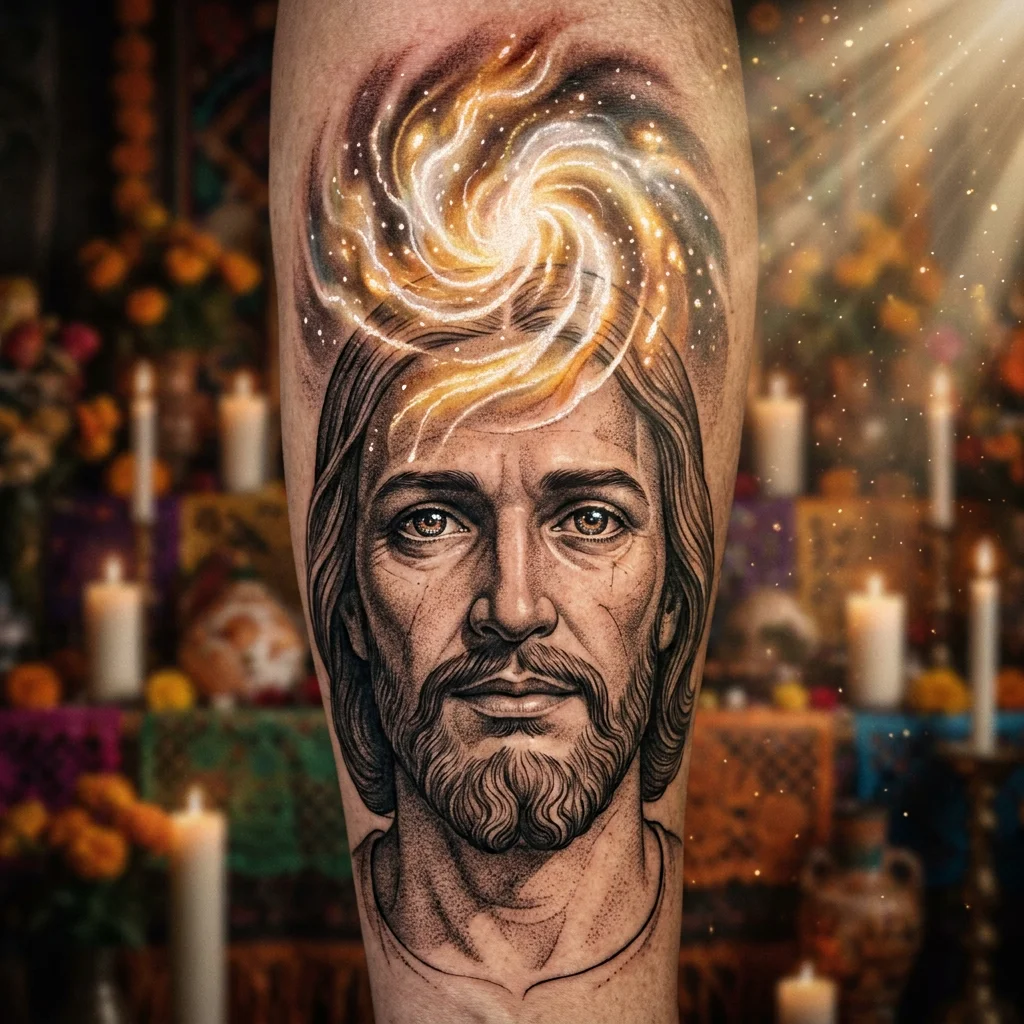
San Judas Tadeo 2026 Visionary Portrait
[IMAGE 2: THE ANATOMY OF A MASTERPIECE]
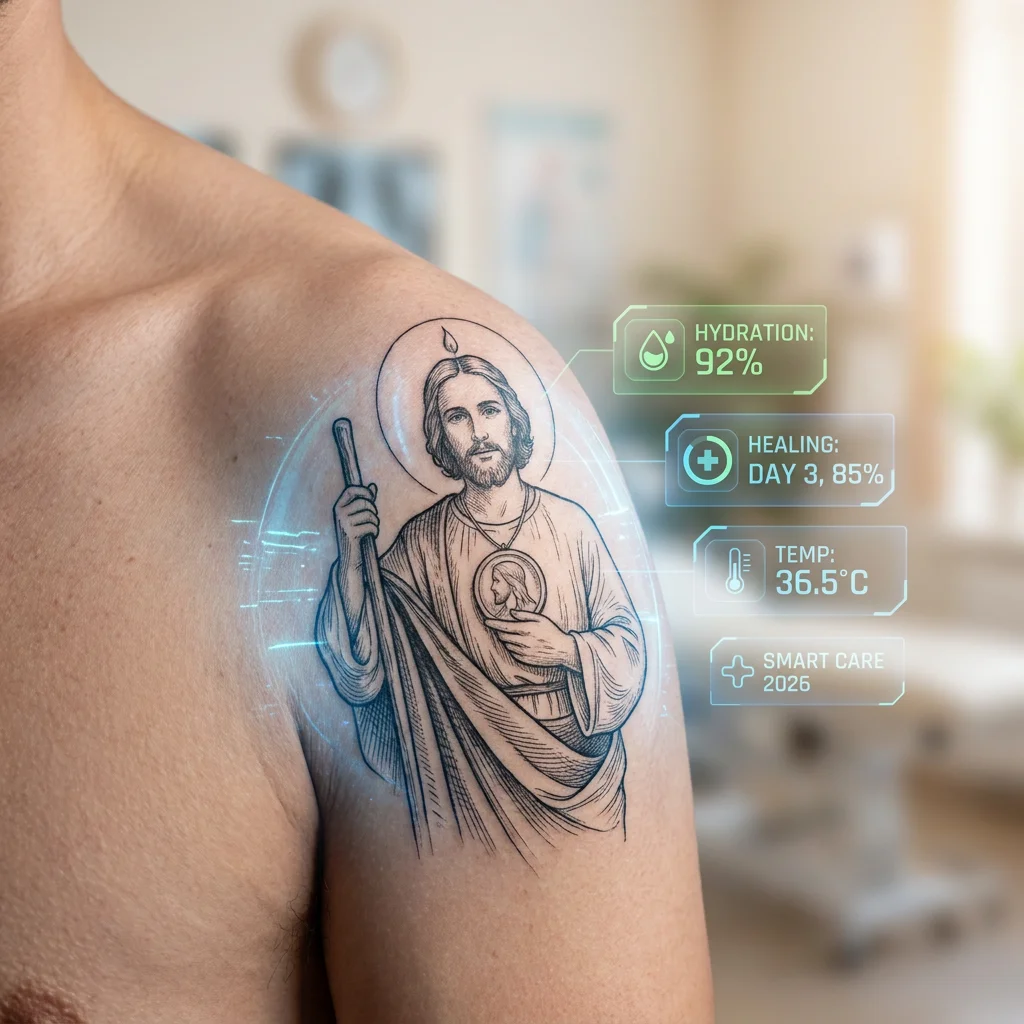
San Judas 2026 Smart Tattoo Mastery
[IMAGE 3: THE GLOBAL PILGRIMAGE]
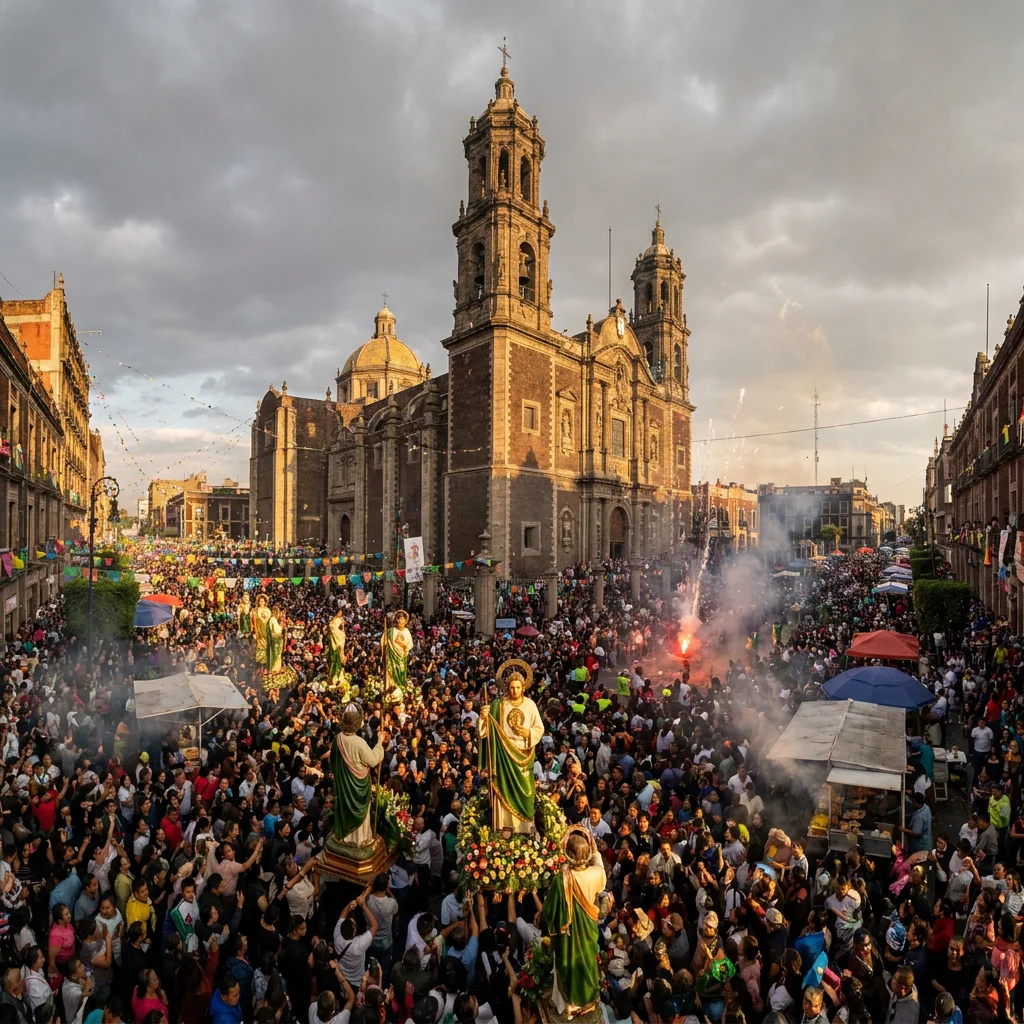
San Judas Global Pilgrimage 2026