

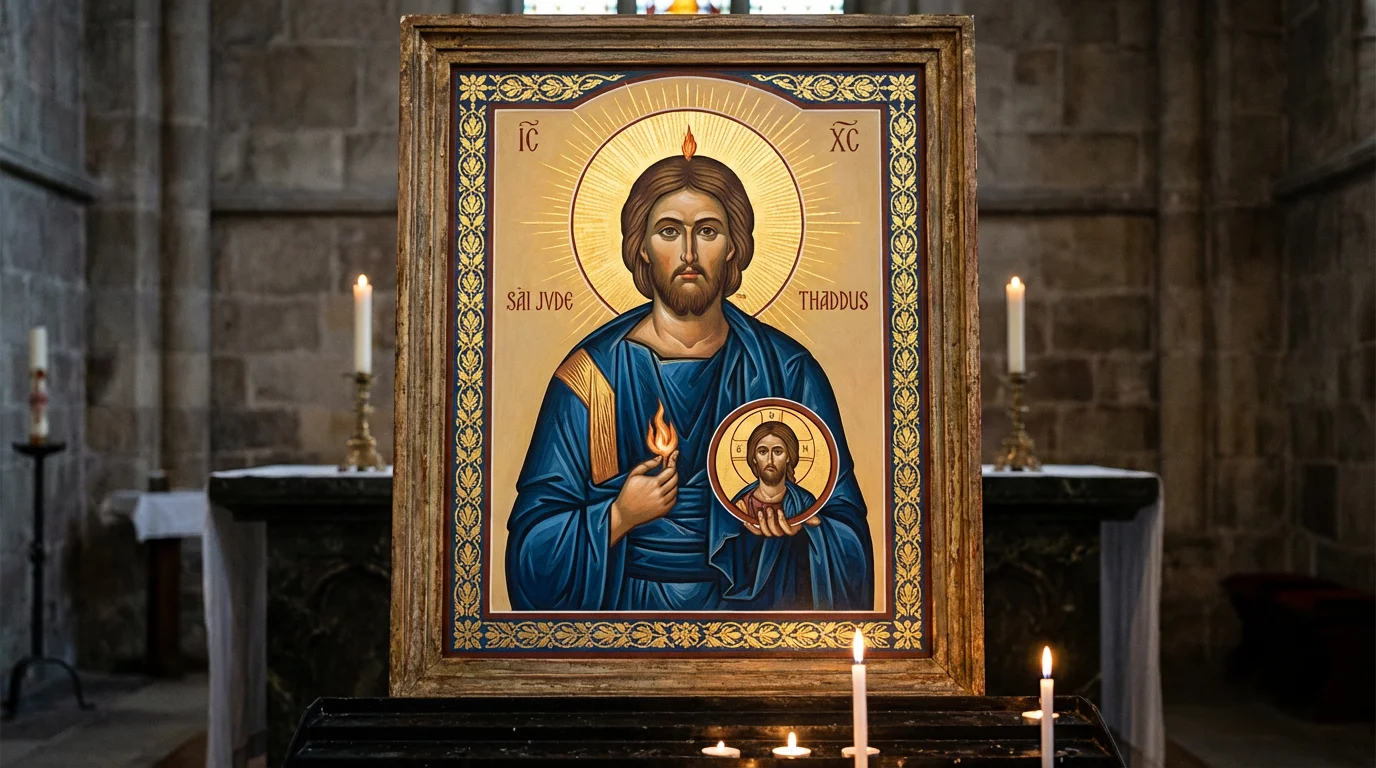
Father Christopher, Catholic Mission of Houston, Texas — 22 years in pastoral ministry to the Hispanic community
In twenty-two years of pastoral ministry to the Hispanic community in Houston, I have sat across from men and women in every kind of desperate situation. Facing deportation. Receiving terminal diagnoses. Watching children disappear into addiction. And in nearly every case, before I could even finish my first prayer with them, they would whisper one name: San Judas Tadeo.
That name carries a whole universe of hope. Let me explain why.
The Historical San Judas Tadeo
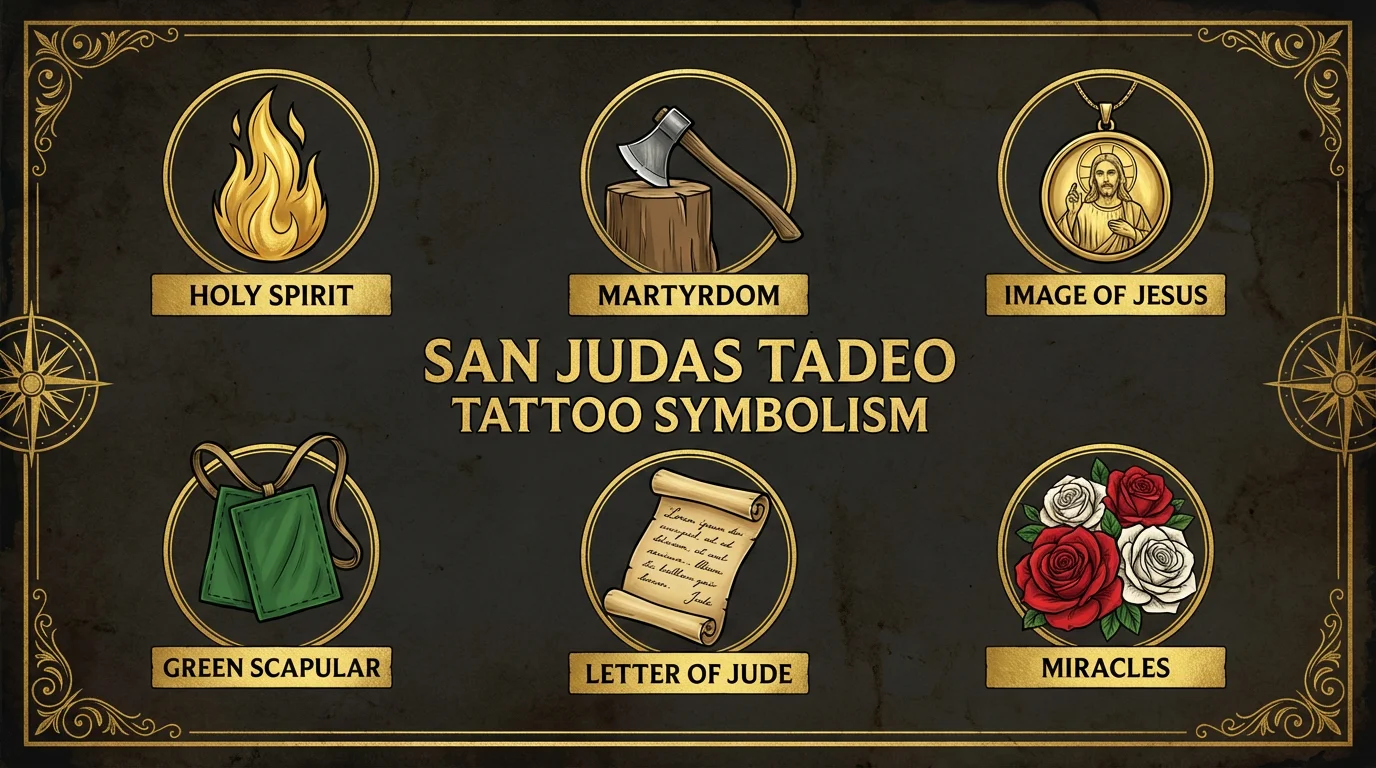
San Judas Tadeo — Saint Jude Thaddeus in English — was a first-century Jewish man born in Galilee. He was called by Jesus of Nazareth to be one of his twelve apostles. According to the Gospels, he was the son of James (or possibly of a man named Clopas) and a cousin of Jesus himself.
His name appears in the lists of apostles in Matthew 10:3, Mark 3:18, Luke 6:16, and Acts 1:13. In the Gospel of John (14:22), he asks Jesus a question that reveals his humble, sincere character: "Lord, how is it that you will manifest yourself to us, and not to the world?"
After the Resurrection and Pentecost, according to ancient tradition, San Judas Tadeo traveled east — preaching in Mesopotamia, Persia, and possibly Armenia. He is said to have brought the message of Jesus to King Abgar of Edessa, healing the king of a terrible illness with the sacred cloth bearing Christ's image (the Mandylion) — which is why he is often depicted carrying a medallion with the face of Jesus.
He was martyred for his faith, tradition holding that he was killed with a club or axe — the instruments he carries in his iconographic representations. His feast day is celebrated on October 28 alongside Saint Simon the Apostle. Learn more about the October 28 feast day celebrations.
Why Is He the Patron of Lost Causes?
The answer to this question is both poignant and unexpected. For many centuries after the early Church, Saint Jude Thaddeus was largely neglected by ordinary believers — not because of any fault of his, but because of his name. "Judas" was the most infamous name in Christian history, associated forever with betrayal. People were reluctant to invoke a saint with that name, fearing confusion or, worse, association with the traitor.
As a result, petitions to San Judas were reserved only for the absolutely desperate cases — situations where the believer had already prayed to every other saint, tried every other remedy, and exhausted every human option. Over generations, this pattern created a saint who specialized in impossible cases — because those were the only cases people brought to him.
And miracles began to be reported. Consistently. Dramatically. The saint who had been overlooked became the most powerful intercessor precisely because he received only the hardest cases — and answered them.
San Judas vs. Judas Iscariot: Are They the Same?
| San Judas Tadeo | Judas Iscariot |
|---|---|
| Apostle — faithful to Jesus | Apostle — betrayed Jesus for 30 silver coins |
| Martyred for his faith | Died by suicide after the betrayal |
| Patron of impossible causes | Symbol of betrayal and despair |
| Venerated as a saint globally | Condemned in Scripture and tradition |
| Also called "Tadeo" to distinguish | "Iscariot" (from Kerioth, his hometown) |
They are completely different people. In Spanish, the use of "Tadeo" as a second name explicitly and intentionally marks the distinction. When you invoke San Judas Tadeo, you are calling on the faithful apostle — not the betrayer.
San Judas in Latin American Culture
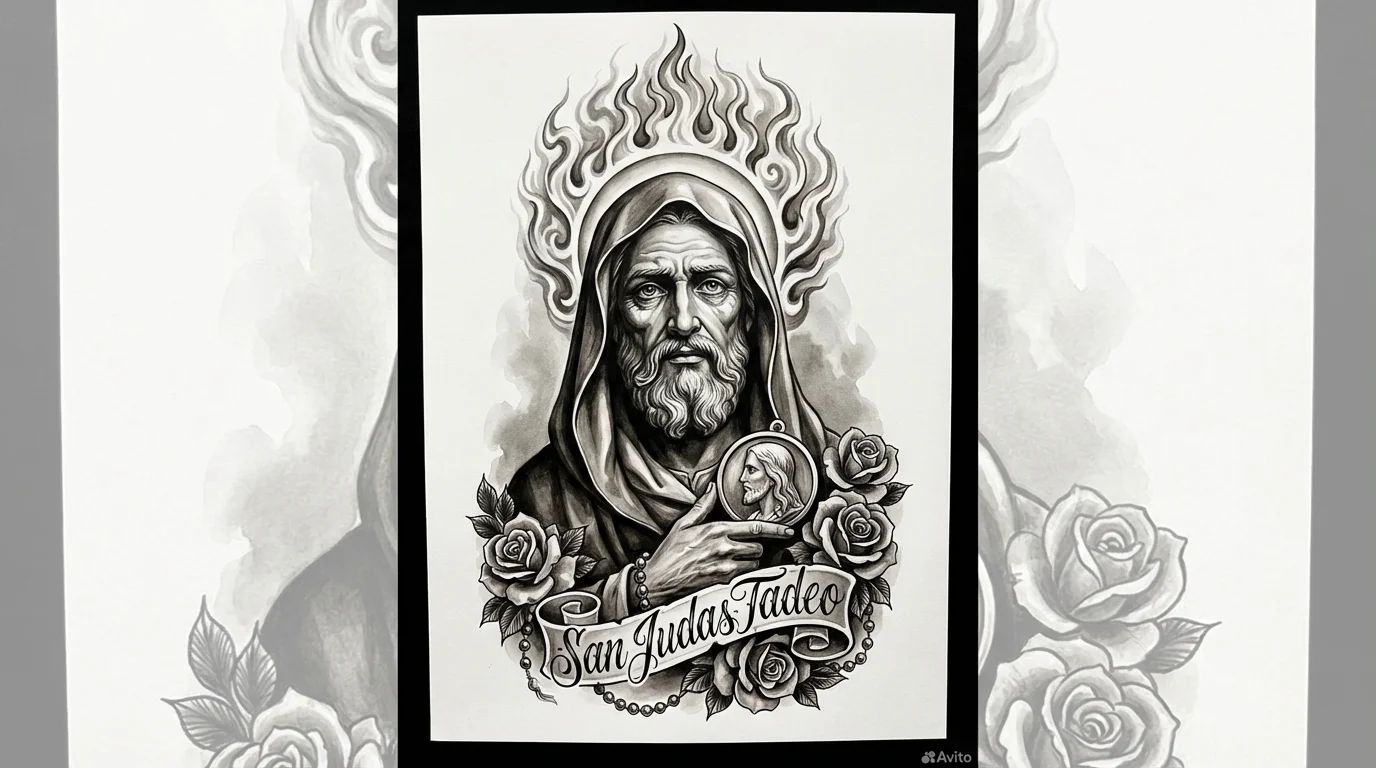
While San Judas is venerated globally, his devotion reached a unique intensity in Mexico and the broader Latin American world — and from there, into the Chicano community of the United States. This is not accidental.
Mexico's history is one of conquest, poverty, and desperate struggle for survival. The colonial period created a class of people for whom life was a permanent impossible cause. San Judas Tadeo — the saint of the impossible — resonated with people who lived impossible lives. His image became a symbol of resistance as much as devotion: I am still here. I still have hope. San Judas has not abandoned me.
Today, the Church of San Hipolito in Mexico City is one of the most visited pilgrimage sites in the Western Hemisphere. On the 28th of every month — and especially October 28th — hundreds of thousands of devotees fill the streets of downtown Mexico City. Young men with tattoos covering their bodies carrying his statue. Mothers with sick children in their arms. Immigrants who crossed deserts to reach safety. All united by the name of San Judas Tadeo.
How to Honor San Judas Tadeo
- Pray the official prayer or novena — especially on the 28th of each month
- Light a green candle and place his image in a prominent place in your home
- Wear his image in silver or gold as a living prayer
- Consider a devotional tattoo as a permanent act of faith and gratitude
- Visit a local parish church for Mass on October 28th
Carry His Blessing Every Day
San Judas Tadeo walks with those who carry his image. Shop our devotional collection — jewelry, statues, temporary tattoos, and more.
San Judas Jewelry All Products Book a TattooMore from sanjudastattoo.com
- Complete Guide: Who Is San Judas Tadeo?
- San Judas Feast Day — October 28 Traditions
- What Does a San Judas Tattoo Mean?
- Tatuajes de San Judas Tadeo
Continue Exploring San Judas Tattoo Ideas
Compare visual directions in the San Judas Tattoo Gallery, learn more about San Judas tattoo meaning and symbols, or browse San Judas art and devotional products. Use these references as inspiration and ask a qualified tattoo artist to adapt scale, detail and placement to your body.