
Who Is San Judas Tadeo? Meaning, Symbols & Devotion
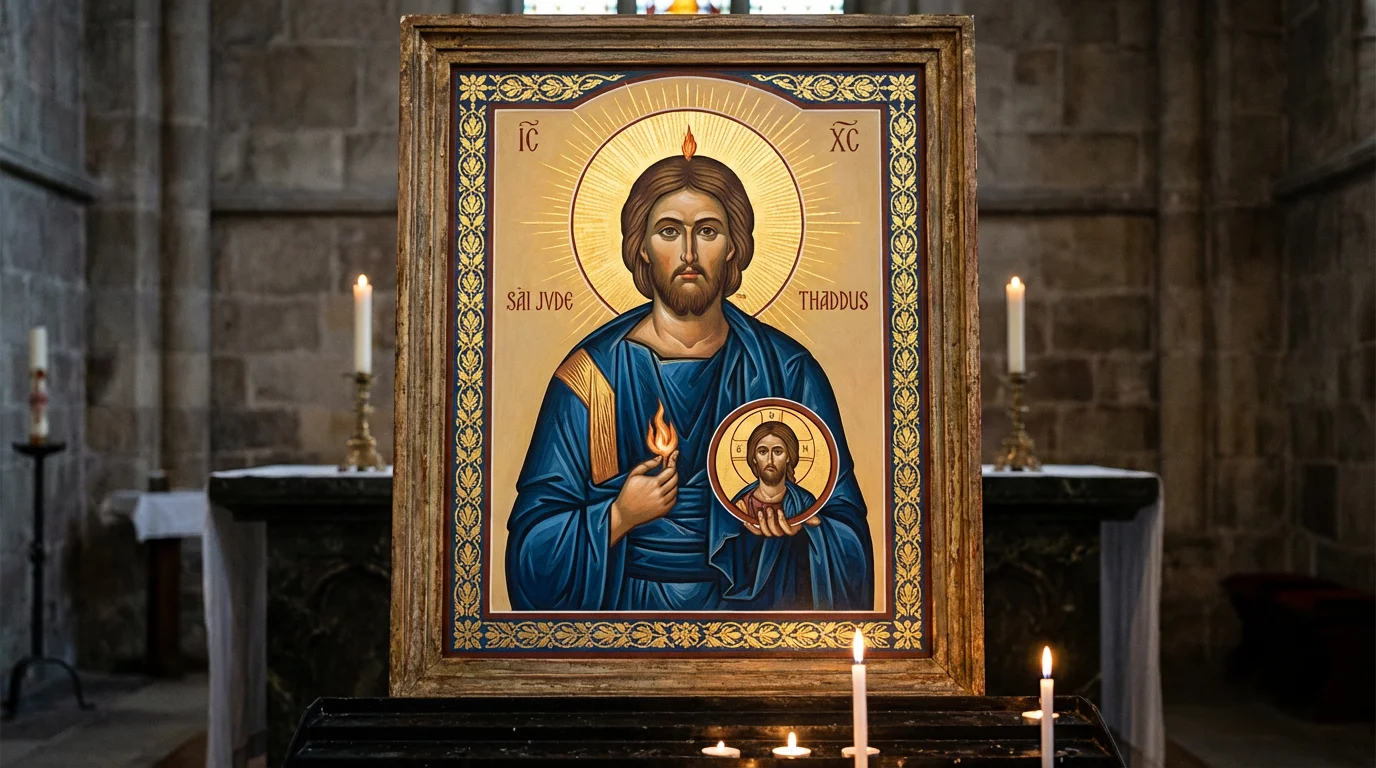
San Judas Tadeo is the Spanish name for Saint Jude Thaddeus, one of the Twelve Apostles named in the New Testament. He is distinct from Judas Iscariot. In Catholic devotional tradition, Saint Jude is associated with hope during difficult or seemingly hopeless circumstances.
For many devotees, the meaning of San Judas Tadeo centers on perseverance, faithful prayer and hope when a situation feels overwhelming. This guide explains his identity, common symbols and cultural significance without replacing personal religious guidance.
Is San Judas Tadeo the Same as Saint Jude?
Yes. San Judas Tadeo is the Spanish form of Saint Jude Thaddeus. The added name Tadeo, or Thaddeus in English, helps distinguish him from Judas Iscariot. The Gospel lists identify Jude or Judas among the Twelve Apostles, while Judas Iscariot is named separately.
What Does San Judas Tadeo Represent?
San Judas Tadeo represents steadfast faith and hope in difficult circumstances. Devotees often turn to him when facing uncertainty, grief or a problem that appears to have no clear solution. Prayer remains a personal practice of faith and does not guarantee a particular result.
His feast is observed on October 28 alongside Saint Simon. For the date, traditions and historical context, visit the San Judas Tadeo feast day guide.
Saint Jude Thaddeus in the New Testament
The New Testament provides limited biographical detail about Jude Thaddeus. He appears in lists of the Twelve, and the Gospel of John records a question from Judas—not Iscariot—during the Last Supper. Later traditions connect him with missionary work and martyrdom, but accounts differ in their details. The Letter of Jude has traditionally been associated with Jude, although scholarly discussions about authorship remain distinct from devotional tradition.
Why Is He Associated with Difficult Causes?
The title “patron of difficult and desperate causes” belongs to a long devotional tradition. One common explanation is that believers historically invoked him less often because his name resembled Judas Iscariot’s, then turned to him in especially difficult circumstances. Over time, that practice shaped his popular patronage.
Common San Judas Tadeo Symbols
| Symbol | Common interpretation |
|---|---|
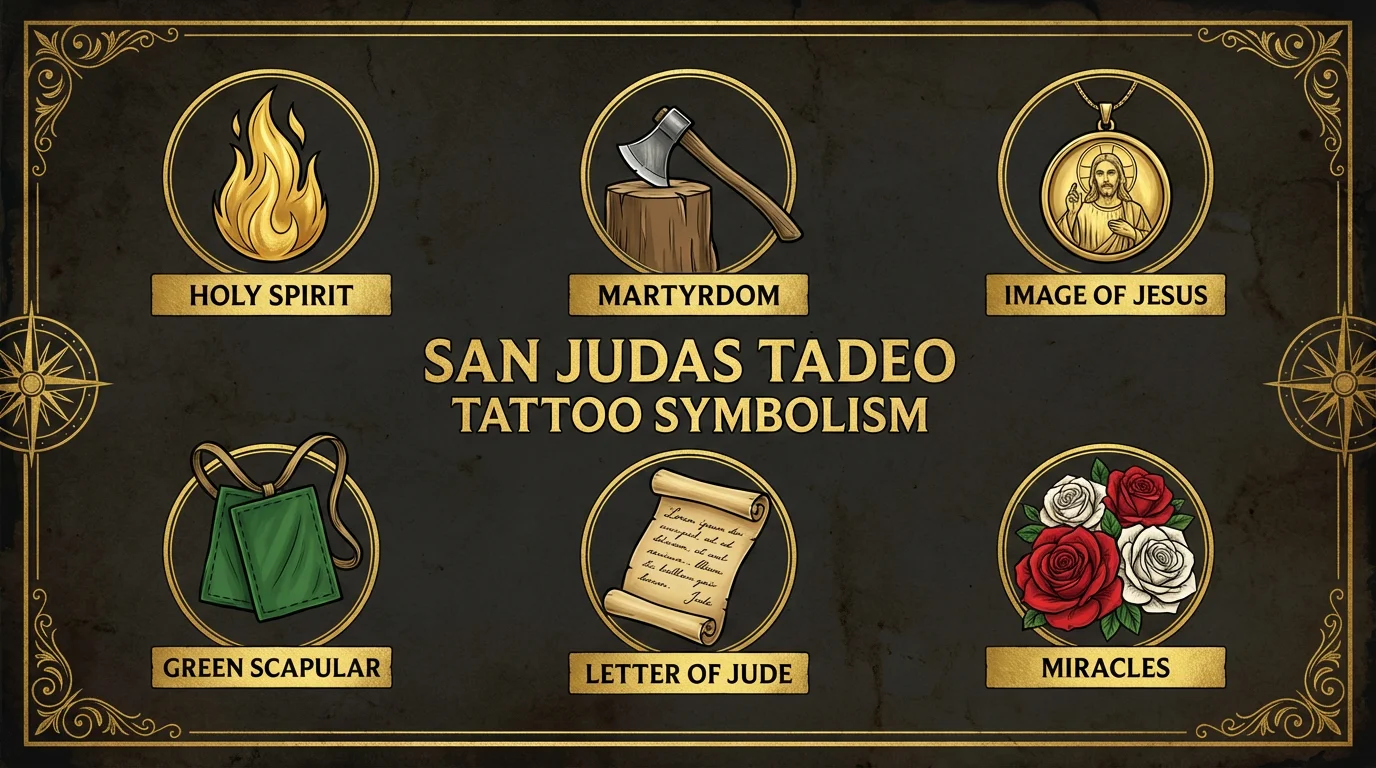
| Flame above the head | The Holy Spirit and Pentecost. |
| Medallion of Christ | A reference to the traditional story of the Image of Edessa. |
| Club or axe | Traditional symbols of his martyrdom. |
| Green robe | A widely used devotional color associated with hope and renewal. |
| Staff or scroll | His apostolic mission, teaching and travel. |
San Judas Tadeo in Hispanic and Mexican Devotion
Devotion to San Judas Tadeo is especially visible in Mexico and throughout Hispanic communities in the United States and Latin America. His image appears in churches, home altars, medals, candles, murals and devotional art. Practices vary by family, parish and region, so no single custom represents every devotee.
How His Meaning Appears in Tattoo Art
In tattoo design, San Judas imagery may express hope, gratitude, endurance or a personal connection to faith and family. The flame, medallion, staff and green robe help keep the figure identifiable. Tattoo context should remain respectful and should not turn a devotional image into a promise of protection or a guaranteed outcome.
Explore the San Judas tattoo meaning guide, browse San Judas tattoo ideas, or compare disclosed visual concepts in the San Judas Tattoo Gallery.
Prayer and Devotional Reading
Readers looking for devotional material can continue to the English Saint Jude prayer guide. Prayer and novena intent are treated separately from this biography so the page can remain focused on identity, meaning and symbols.
Frequently Asked Questions
Is San Judas Tadeo Judas Iscariot?
No. Saint Jude Thaddeus and Judas Iscariot are different figures in the New Testament.
What is San Judas Tadeo known for?
He is widely known in Catholic devotion as the patron of difficult and desperate causes.
When is the feast day of Saint Jude?
The feast of Saints Simon and Jude is observed on October 28.